Why doulas need a website (not just an Instagram page)
The honest answer to "does a doula need a website?" — from someone with a conflict of interest
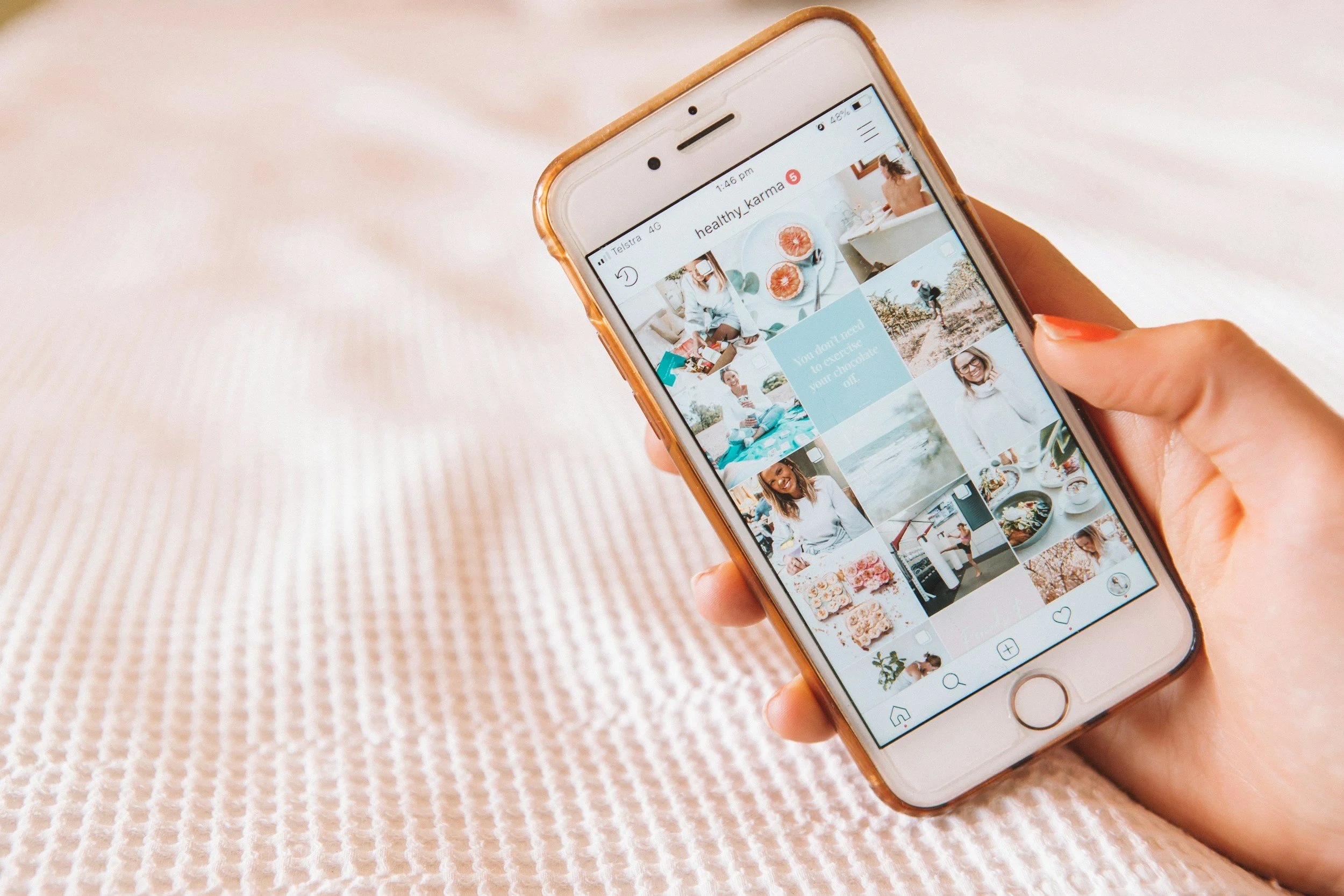
Firstly, I want to declare some conflicts of interest here. I run a business that sells services to doulas who want to build websites that get found by clients and lead to consistent enquiries via search engines and AI. Secondly, I am not a fan of Instagram — I tried it, oh boy did I try, but any meaningful engagement with potential customers was totally outweighed by the horror show of insane, unhinged content I had to contend with every time I went on it. So with that said, I'd like to tell you why I think you need a website not just an Instagram, and you can make your own informed decision.
(Now quietly imagine a maternity ecosystem where everyone offering "information" declared their biases so immediately — would that lead to more informed choices? But I digress.)
So let's get straight into it. This is for those of you who already have thriving Instas but are lacking consistent enquiries, and those who've been feeling guilty about not posting "regularly" (something about the need to post consistently is giving clocking in vibes — and we did not become self-employed to clock in).
Let's be real: Instagram was not designed to be the foundation of your business. It was designed to siphon off the attention of humanity. Relying on it as the sum total of your online presence is, in my opinion, a mistake.
Let me explain why — and what to do instead.
Instagram is borrowed land
When you build your presence entirely on a social media platform, you're building on land you don't own. The algorithm changes. Your reach drops overnight. You take a week off for a rest and come back to find your engagement has fallen off a cliff. You might spend years building an audience and have no way of contacting them directly if the platform disappears tomorrow.
Does anyone know the Happy Cosleeper? Facebook deleted her quarter-million-strong community without any notice and no recourse to have it reinstated.
A website is yours. Your domain, your content, your email list. Nobody can take it away, restrict your visibility, limit your reach, or bury you under paid ads.
And let's fight the powers that be by claiming ownership of your own content — your precious thoughts, creativity and intellectual property. I hadn't really wrapped my head around this one until researching for this blog, and now I'm thinking: how dare all that creative energy it took to come up with engaging Instagram posts actually be working for Instagram and not for me? (Or at best, 95% for Instagram, 5% for me.)
Does a doula need a website? Here's where clients actually come from
Think about how families find their doula. Many come through word of mouth. But a large number start with a Google search. "Doula in Bristol." "Birth doula near me." "Postnatal doula north London." These are people who are ready to sign up — they just don't know who with yet.
If you don't have a doula website, those clients will not find you.
And if you do have a website but it isn't optimised to appear in those searches, the result is the same. Your Instagram might have two thousand followers, but it won't appear when someone types "doula near me" into Google — or asks an AI like ChatGPT or Gemini to recommend a doula in their area.
Social media is (at most) for warming people up
Instagram is where people discover you and start to feel connected to your work. But for doulas, this model has a specific problem: your clients only need you during a very narrow window — roughly the first trimester of pregnancy. You'd need someone to have been following you for months or years before they even become a potential client. That's a long game with no guarantee of payoff.
But let's say you have cultivated a genuinely engaged following. Even then — even if someone has been watching your stories for two years and already feels connected to you — they're still likely to want to dig deeper before they reach out. They want a proper conversation with your brand. They want to read your words at their own pace, understand what working with you actually looks like, and feel confident enough to make contact.
That's where your website does the heavy lifting.
I actually have a short course for doulas whose websites aren't converting visitors the way they'd like — it's called Start the Conversation. It was created for all the doulas who have ever said to me: "If I can get someone on a call or meet them for a coffee, I know they'll sign up — it's the bit before that I can't seem to get consistently. How do I let them know it's worth having a conversation before we actually have the conversation?"
That's exactly what your website can do.
Here's what one of my clients, Natalie Meddings, had to say:
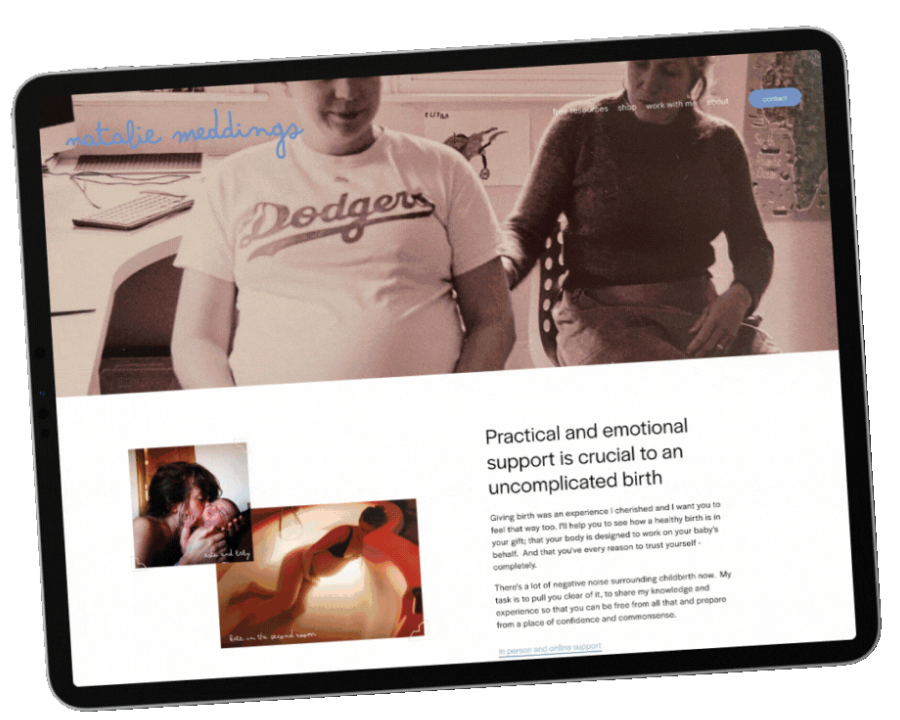
"Laura created a website that I loved because she really listened and made it her business to understand me. With so much on offer online, it's never been more important to really show who you are and what you're about — and Laura is front of the train on that. She helps make the connection people have with your website personal, truthful, and real. People aren't 'taking a look' when they visit, they're starting a conversation — and that's thanks to Laura's design and input."
By the time a potential client lands on your doula website, they're already curious. They want to know who you are, whether you're the right fit, and how to get in touch. Your website needs to do one job brilliantly — make them feel so seen and so confident in you that booking a call feels like the obvious, if not the only, next step.
You deserve a doula business that doesn't depend on the algorithm
I was exhausted from trying to launch courses on social media. The pressure to post consistently, to keep up with trends, to be visible all the time. It's not sustainable for me — and for my clients and students doing emotionally demanding doula work, I understand it can be even harder.
There is another way.
You can do a deep dive into your own work and what makes your clients tick, hone your messaging so that they understand you and want to get in touch, build a website you have complete confidence editing whenever needed — and then let it do the hard work for you.
(By "let it do the hard work" I mean: tell literally everyone about it, and have a sustainable, community-supported strategy for keeping it climbing the Google rankings. But compared to posting every day on Instagram, it's more like a beach holiday.)
Your doula business doesn't have to live where the algorithm lives
My Instagram is full of what yours probably is too: enraging stories of coercion, unnecessary intervention, dismal hospital birth statistics — and that's only the birth-world stuff.
I want to add some nuance here. I'm well aware that I only heard positive birth stories because of social media. Some of the most important movements and transparent citizen reporting of brutality take place on these platforms, to great effect in the birth world as much as anywhere.
But being a passionate advocate for what you believe in doesn't require you to show up on Instagram daily with no regard for what you might find when you open the app. Your business and your personal engagement with the world don't have to intersect in a way that's dictated by anything other than your own capacity, circumstances and choices.
Being glued to social media is not a requirement of being a good citizen. It does appear to be a requirement of an engaged Instagram audience. It's okay to opt out of the latter.
So why does a doula need a website?
A good doula website does the work so you don't have to. It tells your story, answers the questions families are asking, shows up in Google search results and AI recommendations, and starts the conversation with potential clients — even on the days when you're fully present with a family and nowhere near your phone.
In conclusion: does a doula need a website?
A website is the only part of your online presence you truly own - no algorithm can take it away
Doula clients search Google and AI tools like ChatGPT to find local support; Instagram doesn't necessarilyappear in those results
Your client window to sign up with you is narrow (probably sometime between them finding out they’re pregnant and 20 weeks) so you want something that will be ready to show them why you’re the right person at exactly the right time - a website works for you 24/7 even when you're at a birth, they can book straight into your diary for a connection call and you don’t have to be in your DMs every hour of the day.
Social media warms people up - your website is what converts them into enquiries
A well-built doula website lets you engage with the internet on your own terms, without being glued to your phone
You don't need to choose between visibility and sustainability - a website gives you both
If you're ready to build yours, there's a place for you in my courses - whatever stage you're starting from
Thanks so much for reading, let me know what you think or if you have any questions.
A note to all my readers: I use Claude AI to help me write blogs. I tell Claude what I want to write about, get it to write a first draft, copy and paste it into Google Docs and rewrite it. Then I copy and paste it back into Claude and ask it to make sure I’ve included all the best SEO terms for the people whose eyes I want on my services i.e. doulas! I also always say please and thank you even though I’m well aware it’s not human, but because I am!
Using Claude for me is part of a sustainable marketing strategy for my business. If you’d like to know more about how to use AI for marketing your doula website you can learn about this either in The Doula Website Circle (the ultimate sustainable, community driven way of keeping your website up to date), or in The Doula Website Method (for those of you who don’t need the accountability of a live group, just need the cold, hard facts about how to build a successful doula website.)